News
As a leading manufacturer of high-precision clamping systems for CNC machine tools in China, we provide product solutions for the CNC machine tool industry.
KURATA TOOLS - Leading Manufacturer of High Precision Clamping Systems. Discover How We Help




As a leading manufacturer of high-precision clamping systems for CNC machine tools in China, we provide product solutions for the CNC machine tool industry.
2026-09-04 09:48:42
The ER Collet Holder is one of the most common tool holders used in CNC machining, particularly for milling applications. It uses an ER collet to securely clamp cutting tools and connect them to the machine spindle. Its versatility, relatively simple design, good concentricity, and wide range of available sizes make it a popular choice for general-purpose machining.
However, there is no single tool holder that is best for every CNC machine or machining operation. ER, BT, CAT, HSK, end mill, hydraulic, and shrink-fit tool holders all have different characteristics and are selected according to machine type, tooling requirements, cutting conditions, and precision requirements.
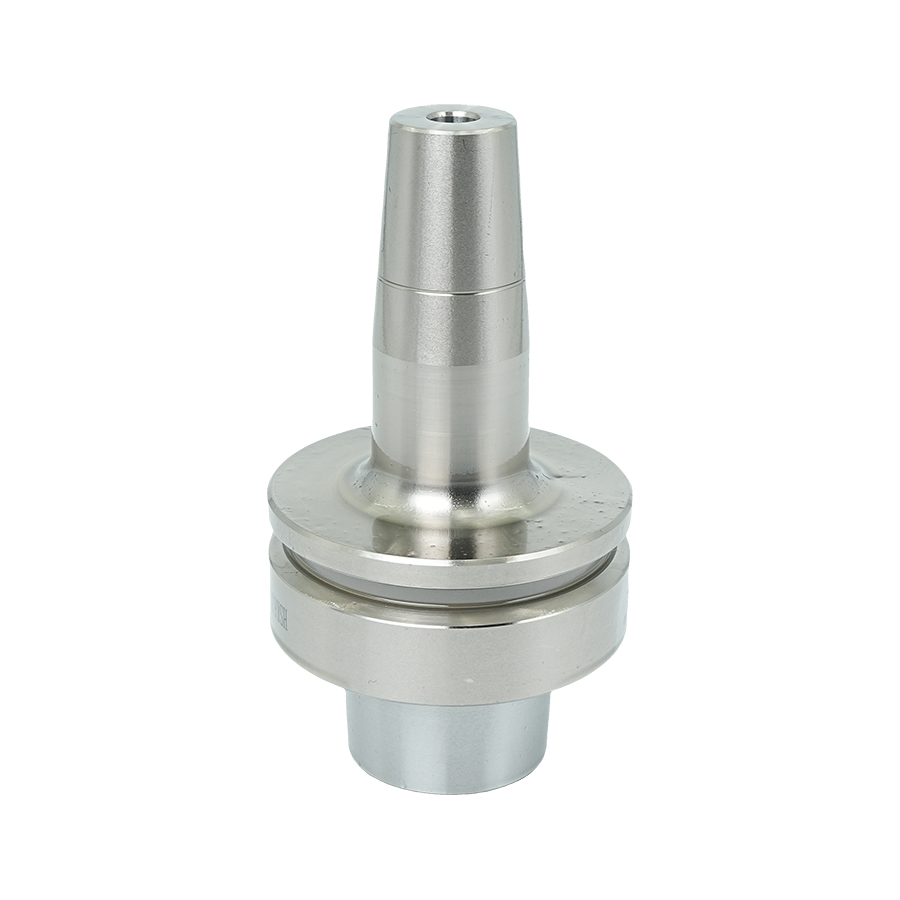
A tool holder is a mechanical component used to securely hold a cutting tool and connect it to a machine spindle. It plays an important role in transferring the spindle's rotational motion and cutting forces to the tool during machining.
In a typical CNC milling system, the tool holder connects the machine spindle with the cutting tool. Depending on the design, it may use a collet, set screw, hydraulic clamping system, or shrink-fit technology to secure the tool.
A typical CNC tool assembly can be represented as:
CNC Machine Spindle → Tool Holder → Collet or Clamping Mechanism → Cutting Tool
For general-purpose CNC milling, the ER collet holder is one of the most widely used tool holder types. ER holders are popular because one holder can accommodate different tool diameters by changing the ER collet.
For example, an ER32 tool holder can use different ER32 Collets within its specified clamping range. This makes the system flexible for workshops that use multiple cutting tool sizes.
There are several reasons why the ER collet holder has become a popular CNC tool holding solution:
Wide range of tool diameters
Good concentricity
Reliable tool clamping
Easy tool changes
Flexible tooling configuration
Suitable for many milling applications
Available in different ER sizes
Relatively economical compared with some high-performance tool holding systems
An ER collet holder is a type of collet tool holder that uses an ER collet and collet nut to clamp a cutting tool. The collet is inserted into the tapered bore of the holder and contracts when the nut is tightened.
This creates radial clamping force around the tool shank. Because the tool is supported around its circumference, an ER system can provide stable and accurate tool holding when the correct collet, holder, and tightening procedure are used.
Common ER systems include:
ER11
ER16
ER20
ER25
ER32
ER40
The appropriate ER size depends on the tool diameter, required gripping capacity, machine configuration, and machining application.
The BT tool holder is widely used on CNC machining centers, particularly on machines using the BT spindle interface. BT holders are designed for good rigidity and reliable connection between the spindle and cutting tool.
Common versions include BT30, BT40, and BT50. The appropriate size depends on the machine spindle and machining requirements.
The CAT tool holder is another widely used CNC tool holder, particularly in North American machining applications. CAT holders are available in different sizes and configurations for milling and other machining operations.
Common sizes include CAT40 and CAT50. They can be equipped with different tool-clamping systems depending on the application.
The HSK tool holder is designed for high-speed and high-precision machining. Its short, hollow taper design provides a rigid connection between the holder and spindle and can offer excellent repeatability.
HSK Tool Holders are frequently used in modern CNC machining applications where high spindle speeds, precision, and dynamic performance are important.
An end mill holder is designed to hold end mills directly, commonly using a set screw. Compared with some collet systems, an end mill holder can provide strong radial rigidity for suitable applications.
End mill holders are often selected for heavier milling operations where rigidity and torque transmission are important.
A hydraulic tool holder uses hydraulic pressure generated inside the holder to clamp the cutting tool. This design can provide good concentricity and vibration damping for precision machining applications.
Hydraulic holders are often considered when surface finish, tool runout, and machining stability are important.
A shrink fit tool holder uses thermal expansion and contraction to clamp the cutting tool. The holder is heated to expand the bore, the tool is inserted, and the assembly contracts as it cools.
This design provides a slim tool profile and high clamping rigidity, making shrink-fit holders suitable for high-speed machining and applications requiring good access to the workpiece.
| Tool Holder Type | Main Feature | Typical Application |
|---|---|---|
| ER Collet Holder | Flexible and versatile clamping | General CNC milling |
| BT Tool Holder | Rigid spindle connection | CNC machining centers |
| CAT Tool Holder | Common industrial spindle interface | CNC milling |
| HSK Tool Holder | High-speed and high-precision performance | Modern CNC machining |
| End Mill Holder | Direct and rigid tool clamping | Heavy milling |
| Hydraulic Tool Holder | Precision clamping and vibration damping | Precision machining |
| Shrink Fit Tool Holder | High rigidity and slim profile | High-speed machining |
The CNC tool holder is mounted into the machine spindle using a compatible taper or interface. The spindle provides the rotational motion required for cutting.
The tool holder uses a suitable clamping mechanism to hold the cutting tool. For an ER system, the tool is secured using an ER collet and collet nut.
During machining, the tool holder transfers rotational torque and cutting forces from the spindle to the cutting tool. A rigid and properly balanced tool holder can contribute to machining stability.
A quality tool holding system helps maintain the position of the cutting tool relative to the machine spindle. Proper tool installation and correct clamping are essential for achieving the expected accuracy and performance.
The first consideration is the machine spindle interface. The tool holder must match the machine's spindle taper and retention system.
The diameter of the cutting tool determines the appropriate clamping system. ER collet holders are particularly flexible because different collets can accommodate different tool diameters within the applicable range.
Different machining operations may require different tool holders. General milling may benefit from an ER collet holder, while heavy milling may favor a rigid end mill holder. High-speed or precision machining may require hydraulic or shrink-fit solutions.
For precision CNC machining, runout, concentricity, balance, rigidity, and repeatability should be considered when selecting a CNC tool holder.
Spindle speed, cutting depth, feed rate, tool diameter, material being machined, and cutting forces all influence tool holder selection.
A tool holder is a broad term covering various systems used to connect and secure cutting tools to a machine spindle. A collet holder is a specific type of tool holder that uses a collet as its clamping mechanism.
Therefore, an ER collet holder is a type of CNC tool holder, but not every tool holder is a collet holder.
The tool holder is an important part of the complete CNC machining system. Even a high-quality cutting tool may not perform properly if the tool holder has excessive runout, insufficient rigidity, poor balance, or an incompatible clamping system.
A suitable tool holder can help support:
Stable cutting performance
Accurate tool positioning
Good concentricity
Reduced tool runout
Consistent machining quality
Longer tool life in suitable applications
Improved surface finish
The ER collet holder is one of the most common tool holders for general-purpose CNC milling because it provides flexible tool clamping, good concentricity, and a wide range of usable tool diameters.
An ER collet holder is used to securely hold cutting tools such as end mills, drills, and other cylindrical-shank tools during CNC machining.
BT and CAT are different spindle interface standards. Both are widely used on CNC machining centers, but their dimensions, flange designs, and machine compatibility differ. The holder should always match the machine spindle specification.
They serve different purposes. HSK describes a spindle/tool-holder interface, while ER refers to a collet clamping system. An HSK holder can also incorporate an ER collet system. The best configuration depends on spindle type, machining speed, precision, and application requirements.
There is no universal best tool holder. ER collet holders are versatile for general milling, while end mill holders, hydraulic holders, shrink-fit holders, and other systems may be more appropriate for specific cutting conditions or precision requirements.
Tool holder accuracy can be affected by holder quality, collet condition, tool shank accuracy, spindle condition, clamping force, cleanliness of mating surfaces, tool balance, and the overall machining setup.
The ER collet holder is one of the most common and versatile tool holders used in general-purpose CNC milling. Its flexible clamping range, easy tool changes, and reliable performance make it suitable for a wide range of machining applications.
However, other systems such as BT Tool Holder, CAT Tool Holder, HSK Tool Holder, End Mill Holder, Hydraulic Tool Holder, and Shrink Fit Tool Holder each offer specific advantages. The right CNC tool holder should be selected based on machine compatibility, tool size, machining conditions, required precision, rigidity, and production requirements.
KURATA Tools specializes in the R&D, production, and sales of high-precision clamping systems for CNC machine tools.
E-mail:sales@kuratatools.com