News
As a leading manufacturer of high-precision clamping systems for CNC machine tools in China, we provide product solutions for the CNC machine tool industry.
KURATA TOOLS - Leading Manufacturer of High Precision Clamping Systems. Discover How We Help




As a leading manufacturer of high-precision clamping systems for CNC machine tools in China, we provide product solutions for the CNC machine tool industry.
2026-08-29 17:33:48
A High Precision Grinder Arbor is a precision tool-holding component used to mount and securely hold grinding wheels, cutters, or other grinding tools on a grinding machine or precision machining equipment. It provides a stable connection between the machine spindle and the grinding tool, helping maintain accurate rotation and reliable machining performance.
For grinding applications, even a small amount of runout or imbalance can affect dimensional accuracy, surface finish, and tool life. A high-quality Precision Grinder Arbor is therefore designed with accurate dimensions, concentricity, and balance to support demanding grinding operations.
Depending on the machine and application, Grinder Arbor designs can vary in spindle interface, tool mounting method, diameter, length, material, and overall configuration.
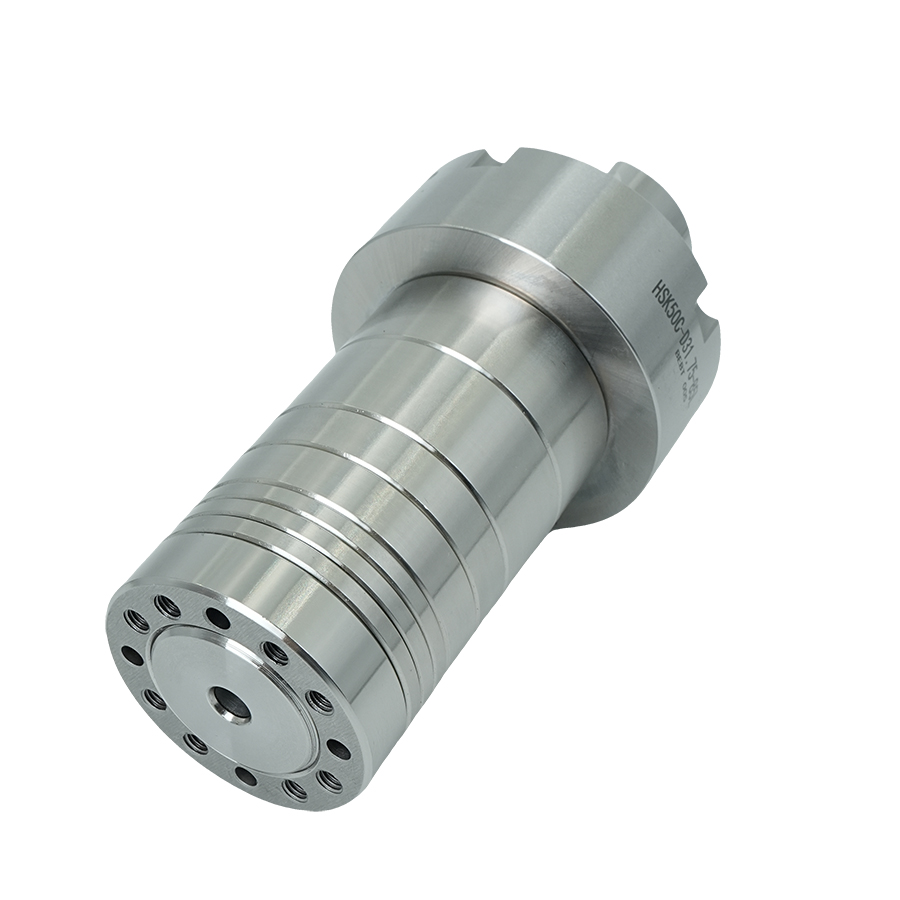
A Grinder Arbor is a mechanical adapter or tool holder that connects a grinding tool to a machine spindle. It is designed to position the grinding wheel or other tool accurately and keep it securely mounted during rotation.
The arbor acts as an interface between the grinding machine and the tool. Its dimensions must match both the machine spindle and the grinding tool to ensure proper installation and stable operation.
A typical Grinding Arbor may include:
Machine spindle interface
Arbor body
Tool mounting section
Locating surfaces
Threaded or clamping section
Locking mechanism
Flange or shoulder
The exact structure depends on the grinding machine and the type of grinding tool being used.
A High Precision Grinder Arbor is manufactured to tighter dimensional and geometric tolerances than a standard arbor. Precision is particularly important in grinding because grinding operations often require very accurate positioning and rotation.
Important characteristics can include:
Low radial and axial runout helps keep the grinding tool rotating accurately around the intended axis.
Excessive runout can result in uneven grinding, dimensional errors, vibration, and poor surface quality.
High concentricity ensures that the tool mounting surface and machine spindle interface remain properly aligned.
This is particularly important for high-speed grinding and precision finishing applications.
A balanced Grinding Arbor helps reduce vibration during rotation. Dynamic balance becomes increasingly important as spindle speed increases.
The arbor must be manufactured according to precise dimensional requirements so that it fits the machine spindle and grinding tool correctly.
The tool must be securely held during operation. A stable clamping structure helps prevent unwanted movement between the arbor and grinding tool.
The basic function of a High Precision Grinder Arbor is relatively simple.
First, the arbor is installed into the grinding machine spindle using the appropriate spindle interface. The grinding wheel or other tool is then mounted onto the arbor and secured using the corresponding clamping mechanism.
When the machine spindle rotates, the arbor transfers rotational movement to the grinding tool.
The basic process is:
Machine Spindle → Grinder Arbor → Grinding Tool → Workpiece
The precision of the arbor helps maintain the position of the grinding tool during rotation.
Grinding machines are commonly used for applications requiring tight dimensional tolerances and excellent surface finishes. Because of this, the quality of the tool-holding system can have a direct influence on machining performance.
A high-precision arbor can help:
Reduce tool runout
Improve rotational accuracy
Reduce vibration
Improve surface finish
Maintain dimensional consistency
Support high-speed operation
Improve grinding stability
Extend grinding tool service life
However, overall grinding accuracy also depends on the machine spindle, grinding wheel, workholding system, dressing process, cutting parameters, and machine condition.
High Precision Grinder Arbors can be manufactured from different materials depending on the application and performance requirements.
Alloy steel is commonly used for precision tool-holding components because it can provide high strength, rigidity, and wear resistance.
Heat-treated or hardened steel can provide improved durability and dimensional stability for demanding machining applications.
Certain applications may require stainless steel because of its corrosion resistance and specific mechanical properties.
The material and heat-treatment process should be selected according to the arbor's operating conditions and required performance.
A Precision Grinder Arbor can be used in different grinding and machining applications.
Typical applications include:
Surface grinding
Cylindrical grinding
Internal grinding
Tool grinding
Precision finishing
Grinding wheel mounting
High-speed grinding
CNC grinding
Precision machining
The specific arbor design should match the machine spindle and grinding tool being used.
Modern CNC grinding machines require highly accurate tool positioning and stable rotation. A High Precision Grinder Arbor can provide the connection between the machine spindle and grinding tool while maintaining accurate alignment.
For CNC grinding, important factors include:
Low runout
High concentricity
Dynamic balance
Spindle compatibility
Tool mounting accuracy
Rigidity
Dimensional stability
A precision arbor can help the grinding machine achieve consistent machining results, especially when working with tight tolerances.
The main difference between a High Precision Grinder Arbor and a standard arbor is the level of precision and performance requirements.
| Feature | Standard Arbor | High Precision Grinder Arbor |
|---|---|---|
| Dimensional accuracy | Standard | High |
| Runout control | Standard | Very low |
| Concentricity | Standard | High |
| Balance | Basic | Precision balanced |
| Vibration control | Standard | Improved |
| High-speed applications | Application dependent | Well suited |
| Precision grinding | Limited depending on design | Excellent |
| Surface finish requirements | General | High precision |
The actual specifications vary between manufacturers and product designs.
The arbor must be compatible with the grinding machine spindle. Different machines may use different spindle interfaces and mounting standards.
The arbor must match the bore diameter, mounting dimensions, and configuration of the grinding wheel or cutting tool.
For precision grinding, low runout is an important specification. A low-runout Grinding Arbor can help improve tool positioning and machining consistency.
If the arbor will be used for high-speed grinding, balance and structural integrity become especially important.
A rigid arbor can help reduce unwanted deflection and vibration during grinding.
The material and heat-treatment process can affect the arbor's strength, wear resistance, and dimensional stability.
For specialized grinding equipment, a standard arbor may not provide the required dimensions or spindle interface. In such cases, a Custom Grinder Arbor can be manufactured according to specific machine and tool requirements.
A Custom Grinder Arbor can be designed according to the specific requirements of a grinding machine, spindle, or grinding tool.
Customization may include:
Overall length
Arbor diameter
Mounting diameter
Spindle interface
Thread specifications
Flange dimensions
Tool bore size
Material
Heat treatment
Surface treatment
Precision requirements
For manufacturers and machining companies, custom Precision Grinder Arbor solutions can help ensure compatibility with specialized grinding equipment.
Proper maintenance can help maintain the accuracy and service life of a Grinder Arbor.
Dust, grinding particles, and debris can affect the contact between the arbor and spindle. Clean the mounting surfaces before installation.
Regularly inspect the arbor for excessive radial or axial runout, especially after long-term use.
Check the arbor for cracks, deformation, wear, or damage to threads and mounting surfaces.
Store precision arbors in a clean and dry environment to reduce the risk of corrosion and mechanical damage.
For high-speed grinding, the arbor and grinding tool should be properly balanced according to the machine and application requirements.
A High Precision Grinder Arbor is a precision tool-holding component used to mount grinding wheels or other grinding tools onto a grinding machine spindle. It is designed to provide accurate positioning, low runout, and stable tool rotation.
A Grinder Arbor connects a grinding machine spindle with a grinding wheel or other grinding tool. It provides the required mounting interface and transfers rotational motion from the spindle to the tool.
Low runout helps keep the grinding tool rotating accurately around the intended axis. This can improve dimensional accuracy, surface finish, and grinding stability.
In most applications, Grinder Arbor and Grinding Arbor refer to similar tool-holding components used to mount grinding tools to a machine spindle. The terminology can vary depending on the manufacturer and application.
Yes. A Custom Grinder Arbor can be manufactured according to specific spindle interfaces, tool dimensions, overall length, diameter, threads, material, and precision requirements.
High Precision Grinder Arbors are commonly manufactured from materials such as alloy steel or hardened steel. The material is selected according to strength, rigidity, wear resistance, speed, and application requirements.
Yes, a properly designed and balanced High Precision Grinder Arbor can be suitable for high-speed grinding. The maximum operating speed should always be confirmed according to the arbor and machine specifications.
Consider the machine spindle interface, grinding tool dimensions, bore size, required runout, spindle speed, rigidity, material, balance requirements, and overall application conditions.
A High Precision Grinder Arbor is an important tool-holding component for precision grinding applications. By providing an accurate and stable connection between the machine spindle and grinding tool, it can help control runout, improve concentricity, reduce vibration, and maintain consistent grinding performance.
When selecting a Precision Grinder Arbor or Grinding Arbor, it is important to consider spindle compatibility, tool dimensions, runout, balance, rigidity, material, and operating speed. For specialized equipment, a Custom Grinder Arbor can be manufactured according to specific machine and grinding tool requirements.
With the right arbor and properly matched grinding system, manufacturers can achieve stable tool rotation and reliable performance in precision grinding and CNC Machining applications.
KURATA Tools specializes in the R&D, production, and sales of high-precision clamping systems for CNC machine tools.
E-mail:sales@kuratatools.com