News
As a leading manufacturer of high-precision clamping systems for CNC machine tools in China, we provide product solutions for the CNC machine tool industry.
KURATA TOOLS - Leading Manufacturer of High Precision Clamping Systems. Discover How We Help




As a leading manufacturer of high-precision clamping systems for CNC machine tools in China, we provide product solutions for the CNC machine tool industry.
2026-08-28 16:10:42
When choosing a CNC tool holder, manufacturers and machinists often compare a Hydraulic Tool Holder vs Shrink Fit Tool Holder. Both are high-precision tool holding solutions designed to secure cutting tools accurately, but they use different clamping methods and offer different advantages in terms of rigidity, vibration damping, tool changing, and ease of use.
A Hydraulic Tool Holder uses hydraulic pressure to clamp the cutting tool, while a Shrink Fit Tool Holder uses thermal expansion and contraction to achieve a tight tool connection. Both can provide excellent runout accuracy and are widely used in precision CNC machining.
Understanding the differences between a Hydraulic Tool Holder vs Shrink Fit can help manufacturers select the right CNC tool holding system for milling, drilling, finishing, and high-speed machining applications.
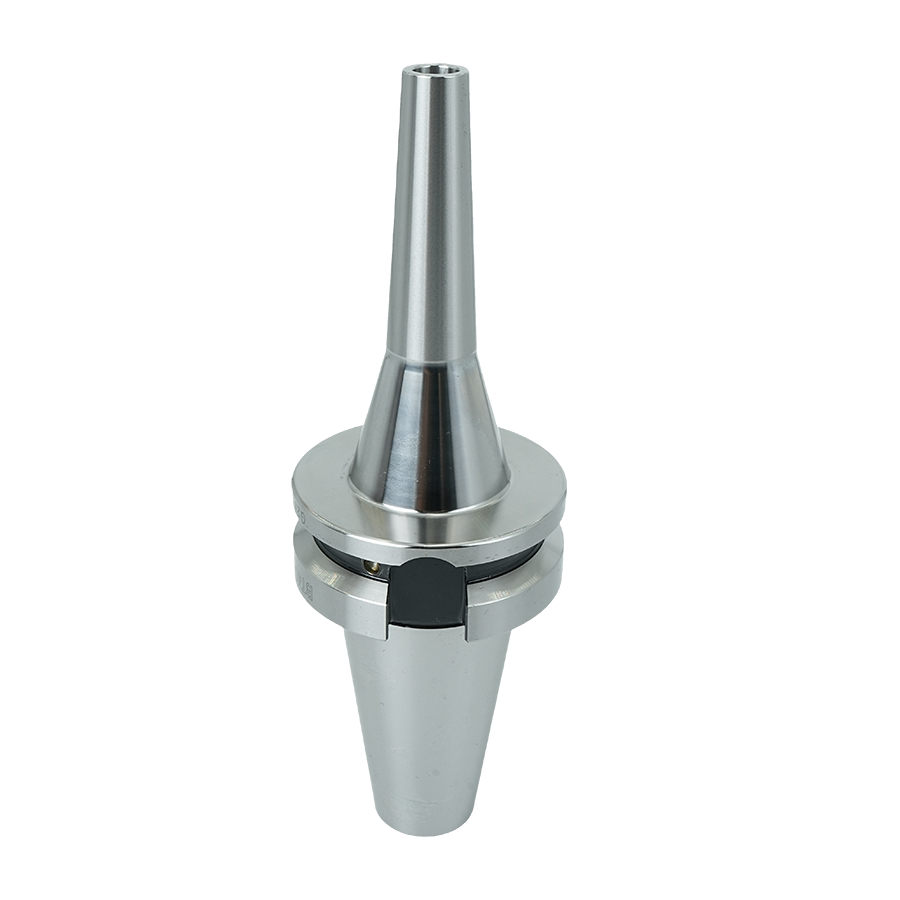
A Hydraulic Tool Holder is a precision CNC tool holder that uses hydraulic pressure to clamp a cutting tool. It contains an internal hydraulic chamber that is activated by tightening a clamping screw.
When the screw is tightened, hydraulic pressure is generated inside the holder. This pressure causes the internal clamping mechanism to grip the tool evenly around its shank.
A Hydraulic Tool Holder is also commonly referred to as a Hydraulic Chuck or hydraulic tool chuck.
A Hydraulic Tool Holder offers several important characteristics:
High clamping accuracy
Low radial runout
Excellent vibration damping
Uniform tool clamping
Easy tool changing
Good surface finish
Suitable for precision machining
No heating equipment required
The hydraulic clamping mechanism provides an even distribution of pressure around the tool shank, helping maintain accurate tool positioning during machining.
A Shrink Fit Tool Holder is a CNC tool holder that secures a cutting tool through thermal expansion and contraction.
The tool holder is heated using a specialized shrink-fit machine. As the holder heats up, its bore expands slightly, allowing the cutting tool to be inserted. After the holder cools, the bore contracts and tightly grips the tool shank.
This process creates a strong and rigid connection between the cutting tool and the holder.
A Shrink Fit Tool Holder typically provides:
High clamping force
Excellent rigidity
Low runout
High concentricity
Strong tool retention
Good performance in high-speed machining
Compact tool holder design
Suitable for precision CNC machining
Because there is no conventional mechanical chuck mechanism surrounding the tool, shrink-fit holders can have a relatively slim profile.
The biggest difference between a Hydraulic Tool Holder and a Shrink Fit Tool Holder is the way the cutting tool is clamped.
The hydraulic chuck contains a hydraulic chamber inside the holder. When the clamping screw is tightened, the hydraulic medium creates pressure against the internal clamping sleeve.
The sleeve then applies uniform radial pressure around the tool shank.
This provides a balanced connection between the CNC tool holder and the cutting tool.
Shrink fitting relies on the thermal expansion properties of the tool holder.
The holder is heated to expand the tool bore. The cutting tool is inserted while the bore is expanded. When the holder cools, it contracts and grips the tool tightly.
A dedicated Shrink Fit Machine is normally required for heating and cooling during tool changes.
The two systems have similar goals but different operating characteristics.
| Feature | Hydraulic Tool Holder | Shrink Fit Tool Holder |
|---|---|---|
| Clamping method | Hydraulic pressure | Thermal expansion and contraction |
| Clamping force | High | Very high |
| Rigidity | High | Very high |
| Runout | Very low | Very low |
| Vibration damping | Excellent | Good |
| Tool changing | Easy | Requires heating |
| Heating equipment | Not required | Required |
| Tool change convenience | Excellent | Moderate |
| High-speed machining | Suitable | Excellent |
| Precision machining | Excellent | Excellent |
| Tool holder profile | Relatively larger | Slim and compact |
| Maintenance | Hydraulic mechanism requires care | Relatively simple holder structure |
The actual performance depends on the specific holder design, tool shank tolerance, machine spindle, cutting conditions, and manufacturer specifications.
Both Hydraulic Tool Holder and Shrink Fit Tool Holder can provide excellent precision.
A hydraulic chuck provides uniform radial clamping and effective vibration damping, making it particularly attractive for finishing operations where surface quality and tool stability are important.
Shrink-fit holders can provide excellent concentricity and rigidity because the tool is held directly and uniformly around its shank.
For high-precision CNC machining, both systems can achieve very low runout when the holder, tool, and machine spindle are properly matched.
Vibration control is another important difference.
Hydraulic Tool Holder generally has better vibration damping characteristics because of its hydraulic clamping structure. This can help reduce chatter during precision machining.
A Shrink Fit Tool Holder provides high rigidity and strong tool retention, but its damping characteristics are generally different from those of a hydraulic chuck.
For applications involving long tool extensions, finishing operations, or vibration-sensitive machining, the damping characteristics of the tool holder should be carefully considered.
One of the biggest advantages of a Hydraulic Tool Holder is convenient tool changing.
A cutting tool can generally be released and clamped by operating the holder's clamping mechanism. No heating machine is required.
By comparison, changing a tool in a Shrink Fit Tool Holder normally requires a dedicated heating system.
The holder must be heated to expand the bore before the cutting tool can be removed or inserted.
Therefore:
Hydraulic Tool Holder → faster and more convenient tool changes
Shrink Fit Tool Holder → requires additional heating equipment
For production environments where frequent manual tool changes are required, a Hydraulic Tool Holder can be more convenient.
Shrink-fit technology is well known for its high rigidity and strong tool retention.
The tool is clamped directly around its shank, creating a rigid connection between the Shrink Fit Tool Holder and cutting tool.
This can be particularly beneficial for:
High-speed milling
Heavy-duty machining
Deep cavity machining
High-precision milling
Applications requiring high tool stability
Hydraulic Tool Holders also provide high rigidity, but their major advantage is the combination of precision, vibration damping, and convenient tool changing.
Both types can be used for high-speed CNC machining when properly designed and balanced.
A Shrink Fit Tool Holder is often preferred for high-speed applications because of its high rigidity, concentricity, and compact design.
However, a high-quality Hydraulic Tool Holder can also perform well in high-speed machining, particularly where vibration damping and precision are important.
The correct choice depends on the machine spindle, cutting tool, tool extension, cutting parameters, and application.
For finishing operations, a Hydraulic Tool Holder can be an excellent choice because of its low runout and vibration damping characteristics.
It can help improve tool stability and surface finish, especially when machining sensitive workpieces.
A Shrink Fit Tool Holder can also provide excellent finishing performance because of its high concentricity and rigidity.
Therefore, both systems can be used for precision finishing, but hydraulic holders may have an advantage when vibration control is a major concern.
For heavy-duty cutting, rigidity and clamping force are particularly important.
A Shrink Fit Tool Holder provides strong tool retention and high rigidity, making it suitable for demanding machining conditions.
However, the final performance also depends on the cutting tool, tool diameter, holder size, machine spindle, material being machined, and cutting parameters.
For heavy-duty applications, manufacturers should select the complete tool holding system rather than evaluating the holder alone.
The best option depends on your machining requirements.
Choose a Hydraulic Tool Holder when you prioritize:
Easy tool changing
Vibration damping
Precision machining
Low runout
Good surface finish
Convenient operation
Flexible tool management
Choose a Shrink Fit Tool Holder when you prioritize:
High rigidity
High clamping force
Compact tool holder design
Excellent concentricity
High-speed machining
Strong tool retention
Minimal external interference
For many CNC machining applications, both technologies can provide excellent results when correctly specified.
The holder must match the cutting tool shank diameter and tolerance. Common tool shank sizes vary depending on the machine and application.
The CNC Tool Holder must be compatible with the machine spindle interface, such as BT, HSK, CAT, or other standards.
Precision milling and finishing operations require a holder with sufficiently low runout to maintain tool accuracy.
Consider spindle speed, feed rate, cutting depth, cutting force, and machining material when selecting the holder.
Longer tool extensions are more susceptible to vibration and deflection. In these applications, the damping characteristics and rigidity of the tool holder become especially important.
If tools need to be changed frequently, a Hydraulic Tool Holder may provide greater convenience because it does not require a heating machine.
A Hydraulic Chuck and a Shrink Fit Holder are both precision tool holding systems, but their clamping technologies are different.
Hydraulic Chucks use hydraulic pressure to provide uniform clamping and excellent vibration damping.
Shrink Fit Holders use thermal expansion and contraction to create a strong, rigid connection.
In simple terms:
Hydraulic Chuck = precision + vibration damping + convenient tool changing
Shrink Fit Holder = rigidity + high clamping force + compact design
The choice should be based on the actual machining process rather than simply selecting one technology as universally better.
A Hydraulic Tool Holder uses hydraulic pressure to clamp the cutting tool, while a Shrink Fit Tool Holder uses thermal expansion and contraction. Hydraulic holders are known for vibration damping and convenient tool changes, while shrink-fit holders offer high rigidity and strong tool retention.
Neither is universally better. A Hydraulic Tool Holder can be better for applications requiring vibration damping, precision, and convenient tool changes. A Shrink Fit Tool Holder can be better for applications requiring high rigidity, strong clamping force, and high-speed machining.
Shrink Fit Tool Holders generally provide very high rigidity because the tool is tightly clamped around its shank. However, actual rigidity depends on the holder design, tool diameter, extension length, machine spindle, and cutting conditions.
A Hydraulic Tool Holder generally provides better vibration damping because of its hydraulic clamping mechanism. This can be beneficial for finishing operations and vibration-sensitive machining.
A Hydraulic Tool Holder is generally easier and faster to change because it does not require a heating machine. Shrink Fit Tool Holders normally require heating equipment for tool insertion and removal.
Yes. A dedicated Shrink Fit Machine is normally used to heat the holder during tool installation and removal.
Yes. High-quality Hydraulic Tool Holders can be used for high-speed and precision CNC machining when the holder is properly balanced and matched to the machine and cutting conditions.
A Hydraulic Chuck is a type of precision Hydraulic Tool Holder that uses hydraulic pressure to clamp a cutting tool. It is known for accurate clamping and good vibration damping.
The best CNC Tool Holder depends on the machining application. Hydraulic tool holders are useful for precision and vibration-sensitive machining, while shrink-fit holders are well suited to applications requiring high rigidity, strong clamping, and high-speed performance.
When comparing Hydraulic Tool Holder vs Shrink Fit, both technologies provide reliable solutions for precision CNC machining, but they have different strengths.
A Hydraulic Tool Holder offers excellent runout accuracy, vibration damping, and convenient tool changing. It is a practical choice for precision machining and applications where surface finish and easy operation are important.
A Shrink Fit Tool Holder provides high rigidity, strong clamping force, excellent concentricity, and a compact design. It is particularly suitable for high-speed and demanding CNC machining applications.
Ultimately, the right choice depends on your machine, cutting tool, machining material, spindle speed, tool extension, cutting conditions, and tool-changing requirements.
KURATA Tools specializes in the R&D, production, and sales of high-precision clamping systems for CNC machine tools.
E-mail:sales@kuratatools.com