News
As a leading manufacturer of high-precision clamping systems for CNC machine tools in China, we provide product solutions for the CNC machine tool industry.
KURATA TOOLS - Leading Manufacturer of High Precision Clamping Systems. Discover How We Help




As a leading manufacturer of high-precision clamping systems for CNC machine tools in China, we provide product solutions for the CNC machine tool industry.
2026-08-21 17:31:57
Choosing the right HSK Tool Holder size comes down to matching three things to your job: the tool diameter you're actually running, the spindle speed your machine operates at, and the balancing grade your application's precision requirements demand. Picking a holder based on taper size alone without checking these three against your real operating conditions is how buyers end up with a holder that's technically HSK-compatible but wrong for the job — undersized for the tool, or balanced for a speed you'll never run.
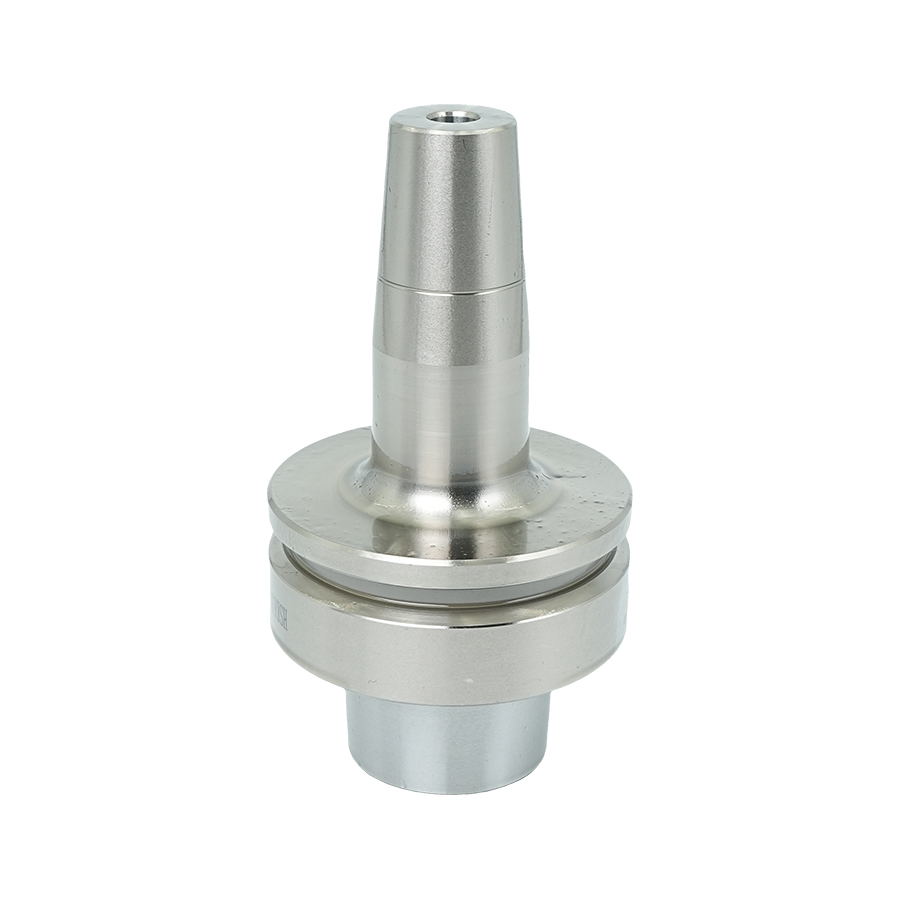
HSK Holders come in a range of sizes, each built around a specific clamping range and rated maximum speed. As a reference, common sizes break down roughly like this: HSK-A32 clamps Ø3–Ø12mm tools up to 30,000 RPM, HSK-A40 clamps Ø3–Ø20mm up to 25,000 RPM, HSK-A50 clamps Ø6–Ø25mm up to 20,000 RPM, HSK-A63 clamps Ø6–Ø32mm up to 18,000 RPM, and HSK-A100 clamps Ø10–Ø50mm up to 12,000 RPM. Notice the pattern — larger clamping range generally means lower maximum speed. If your job runs a large-diameter tool at high RPM, no single standard size may fit both requirements equally well, and that's worth flagging to your supplier directly rather than defaulting to whichever size matches your tool diameter alone.
Dynamic balancing grade — commonly specified as G2.5 or G6.3 at a given RPM — describes how much residual imbalance a holder has at speed, and it matters more the faster you're running. A holder like the HSK-A32 or HSK-E32 typically holds G2.5 balancing up to 25,000–30,000 RPM, appropriate for high-speed finishing work, while a larger HSK-A100 is more commonly rated G6.3 at 12,000 RPM, reflecting its lower typical operating speed. If your process runs closer to a holder's maximum rated speed rather than well under it, ask specifically about the balancing grade at your actual operating RPM — a holder that's technically rated for a speed doesn't necessarily perform identically across its full rated range.
HSK holders aren't a single interchangeable family — the letter designation matters. HSK-A is a general-purpose dual-contact design covering most milling and drilling applications, available across the widest size range. HSK-E is built specifically for high-speed contact, rated for higher RPM than an equivalent-size HSK-A holder (an HSK-E32 runs up to 40,000 RPM versus an HSK-A32's 30,000 RPM), making it the better fit for high-speed finishing and small-diameter tooling. HSK-F is oriented toward milling and drilling applications at moderate-to-high speed with a mid-range clamping capacity. If a supplier recommends a size without asking which series fits your speed and application profile, that's worth a follow-up question before ordering.
HSK Tool Holders are used across aerospace, mold manufacturing, precision engineering, automotive, medical equipment, and electronics production, and the typical size and series varies by industry. Aerospace and mold making often run smaller-diameter tooling at high speed for fine detail work, favoring HSK-A32/A40 or HSK-E series holders. Automotive and general precision engineering work spans a wider range depending on the specific operation, from small-diameter finishing to larger roughing tools, which is where HSK-A50 through A100 typically come into play. If you're sourcing for a specific industry application, tell your supplier the actual operation — roughing, finishing, drilling — rather than just the industry name, since the right size depends more on the operation than the sector.
What tool diameter range and spindle speed does your specific job actually run, not just the general range your machine supports?
Does the recommended size and series hold its balancing grade at your actual operating RPM, not just its maximum rated speed?
Is HSK-A, HSK-E, or HSK-F the right series for your speed and application, or is the supplier defaulting to one series regardless of use case?
What's the documented runout accuracy for the specific holder, and does it meet your precision requirement?
If you know your tool diameter, spindle speed, and application, send the details directly for a recommendation — for a broader explanation of how HSK holders work and how they compare to BT holders, see our HSK tool holder overview.
HSK-A100 typically clamps tool diameters from Ø10mm to Ø50mm, rated up to 12,000 RPM with a balancing grade around G6.3 at that speed. It's generally used for larger-diameter tooling in lower-speed operations compared to smaller HSK sizes.
HSK-A is a general-purpose design suited to most milling and drilling work across a wide size range. HSK-E is built for high-speed applications, rated for higher RPM than an equivalent HSK-A size, making it better suited to high-speed finishing and small-diameter tooling.
Start with your actual tool diameter and the spindle speed your job runs at, then check both against the clamping range and rated RPM for each HSK size. If your tool diameter and speed requirements point to different sizes, flag that to your supplier rather than guessing — they can recommend the best tradeoff or series for your specific operation.
High-precision HSK tool holders commonly specify runout accuracy of ≤3 microns. Confirm this figure is documented for the specific holder and size you're ordering, not just claimed generally across the product line.
KURATA Tools specializes in the R&D, production, and sales of high-precision clamping systems for CNC machine tools.
E-mail:sales@kuratatools.com