News
As a leading manufacturer of high-precision clamping systems for CNC machine tools in China, we provide product solutions for the CNC machine tool industry.
KURATA TOOLS - Leading Manufacturer of High Precision Clamping Systems. Discover How We Help




As a leading manufacturer of high-precision clamping systems for CNC machine tools in China, we provide product solutions for the CNC machine tool industry.
2026-08-13 16:49:18
Both Shrink Fit Tool Holders and Hydraulic Tool Holders are designed for precision CNC machining, but they use different clamping methods and offer different advantages during production. Shrink fit holders are often considered when high rigidity, concentricity, and high-speed machining are priorities, while hydraulic holders can be attractive when precision, vibration control, and convenient tool clamping are important.
The better choice depends on the machine, cutting tool, machining operation, required accuracy, spindle speed, and production environment. Instead of choosing one holder type for every application, CNC manufacturers should compare the requirements of each machining process.
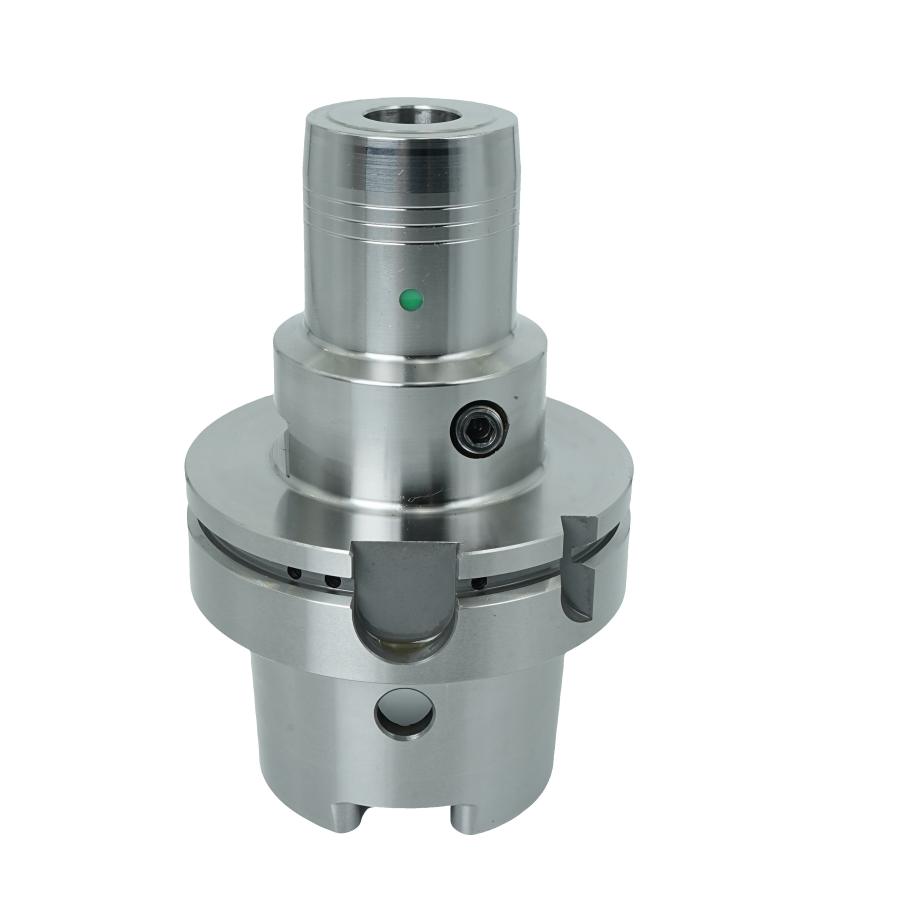
A shrink fit tool holder clamps the cutting tool through thermal expansion and contraction. The holder is heated to expand the bore, allowing the cutting tool to be inserted. As the holder cools, the bore contracts around the tool shank to create a strong clamping connection.
This design provides a compact tool-holding system without the need for a conventional collet or mechanical nut. The relatively slim profile can also be useful when machining deep cavities or areas with limited tool access.
Shrink fit holders are commonly considered for applications where rigidity, concentricity, and stable tool holding are important, particularly in high-speed and precision CNC machining.
A hydraulic tool holder uses hydraulic pressure to clamp the cutting tool. Instead of mechanically tightening a collet or heating the holder, the operator activates the hydraulic clamping mechanism to secure the tool.
Hydraulic clamping can provide precise tool positioning and effective vibration damping. This makes hydraulic holders worth considering for precision machining and finishing operations where tool stability and surface quality are important.
For production environments where operators frequently change tools, the clamping process can also be an important factor when comparing hydraulic and shrink fit systems.
| Factor | Shrink Fit Tool Holder | Hydraulic Tool Holder |
|---|---|---|
| Clamping method | Thermal expansion and contraction | Hydraulic pressure |
| Tool profile | Compact and slim | Generally designed around hydraulic clamping components |
| Rigidity | High, depending on design and application | High, with effective damping characteristics |
| Vibration control | Strong tool holding can help minimize vibration | Hydraulic clamping can provide vibration damping |
| Tool changing | Requires heating equipment | Hydraulic clamping mechanism |
| Typical focus | High-speed and high-precision machining | Precision machining and vibration-sensitive operations |
For high-speed machining, a shrink fit tool holder can be a strong option because the clamping system provides a compact connection between the holder and cutting tool. The absence of a conventional collet and nut can also help create a slim tool assembly.
However, high-speed machining requires more than selecting a shrink fit holder. Holder balance, runout, tool geometry, spindle speed, tool projection, and the overall spindle-tool assembly should all be considered.
If your CNC process involves high spindle speeds and requires stable tool positioning, discuss the actual RPM and tool dimensions with the manufacturer before selecting the holder.
Vibration can negatively affect surface finish, tool life, dimensional accuracy, and machining stability. For operations where vibration is a major concern, a hydraulic tool holder may be worth considering because its hydraulic clamping system is designed to provide stable tool holding and damping characteristics.
Shrink fit holders can also provide rigid and concentric clamping, so the choice should not be based on holder type alone. Tool projection, cutting parameters, workpiece material, tool geometry, and machine rigidity can have a significant effect on the final result.
Tool-changing requirements can influence the overall cost and efficiency of a CNC production process. Shrink fit systems require a heating and cooling process when installing or removing the cutting tool. This can add an additional equipment and workflow requirement.
Hydraulic holders use a hydraulic clamping mechanism instead. For production environments with frequent tool changes, buyers may therefore prefer to evaluate hydraulic systems based on their workflow and tooling requirements.
The important question is not simply which holder changes tools faster, but whether the complete tool-changing process fits the production cycle and equipment available in the machining facility.
Both holder types can be used for precision CNC machining when the holder is manufactured correctly and matched with the appropriate cutting tool and spindle system. Precision should therefore be evaluated using the actual specifications of the holder rather than assuming that one clamping method is automatically more accurate.
Important specifications include radial runout, holder balance, taper accuracy, tool shank fit, and overall manufacturing tolerance.
KURATA emphasizes high-precision manufacturing and grinding capabilities for its tool-holding products. For a precision machining project, buyers should request the specific runout and dimensional specifications for the holder model they plan to purchase.
A shrink fit holder may be a suitable option when your machining process prioritizes:
High-speed CNC machining
High rigidity
Compact tool assemblies
High concentricity
Deep cavity machining
Stable tool clamping
Precision milling operations
It is particularly worth evaluating when tool access is restricted and a slim holder profile can provide additional clearance around the workpiece.
A hydraulic tool holder may be more suitable when the machining process places greater emphasis on:
Precision machining
Vibration control
Stable tool holding
Finishing operations
Convenient tool clamping
Applications where surface finish is important
As with shrink fit systems, the actual application should determine the final selection. A hydraulic holder is not automatically better for every precision machining process.
| Requirement | Questions to Ask |
|---|---|
| Machine | What spindle taper and standard does the CNC machine use? |
| Cutting tool | What is the tool shank diameter and required projection? |
| Machining speed | What spindle speed will be used? |
| Precision | What runout and dimensional accuracy are required? |
| Vibration | Is vibration affecting surface finish or tool life? |
| Production | How frequently are tools changed? |
If high-speed machining, rigidity, compact dimensions, and concentric tool clamping are the primary requirements, a shrink fit tool holder may be the better starting point.
If vibration control, precision finishing, and convenient hydraulic clamping are more important, a hydraulic tool holder may deserve closer consideration.
For production facilities using both high-speed roughing and precision finishing processes, there may be no need to choose only one system. Different holder types can be assigned to different machining operations according to their technical requirements.
The holder is an important part of the complete spindle-tool assembly. Small differences in taper accuracy, runout, balance, dimensions, or clamping performance can affect machining results.
Working directly with an experienced CNC tool holder manufacturer allows buyers to discuss the machine spindle, cutting tool, machining conditions, required accuracy, and production quantity before selecting a holder.
KURATA provides multiple tool-holding solutions, including shrink fit and hydraulic systems, as well as ER Collet Holders, Face Mill Holders, heavy-duty tool holders, and other CNC clamping products. This makes it possible to evaluate different holder configurations according to the requirements of a specific machining application.
When requesting a quotation, provide the spindle standard, tool diameter, machining operation, spindle speed, required accuracy, and quantity. These details help the manufacturer recommend the appropriate tool holder instead of supplying a generic configuration.
Neither is universally better. Shrink fit holders can be advantageous for high-speed, rigid, and compact tool holding, while hydraulic holders can be attractive for precision machining and vibration-sensitive applications. The correct choice depends on the machining conditions.
Yes. Shrink fit holders are commonly considered for high-speed machining because of their rigid and compact clamping design. However, the complete tool assembly must be evaluated for balance, runout, spindle speed, tool projection, and other operating conditions.
Hydraulic tool holders can be suitable for precision machining where stable clamping and vibration control are important. The actual performance depends on the holder design, tool, machine, and machining parameters.
Provide the CNC machine spindle standard, cutting tool shank diameter, machining operation, spindle speed, required runout, tool projection, quantity, and any special dimensional requirements.
For OEM or production projects, sharing a drawing or current tool-holder specification with the manufacturer can further simplify product selection and quotation.
KURATA Tools specializes in the R&D, production, and sales of high-precision clamping systems for CNC machine tools.
E-mail:sales@kuratatools.com