News
As a leading manufacturer of high-precision clamping systems for CNC machine tools in China, we provide product solutions for the CNC machine tool industry.
KURATA TOOLS - Leading Manufacturer of High Precision Clamping Systems. Discover How We Help




As a leading manufacturer of high-precision clamping systems for CNC machine tools in China, we provide product solutions for the CNC machine tool industry.
2026-08-13 16:38:52
Choosing the right CNC tool holder depends on more than the machine spindle. The machining operation, cutting speed, required accuracy, tool diameter, clamping method, rigidity, and workpiece material all affect which tool holder is suitable. For CNC machining centers, the right holder can help maintain stable tool positioning, reduce runout and vibration, and support consistent machining results.
For buyers sourcing CNC tool holders for production or OEM applications, the most important step is to match the holder type and spindle interface with the actual machining requirements rather than choosing only by price or appearance.
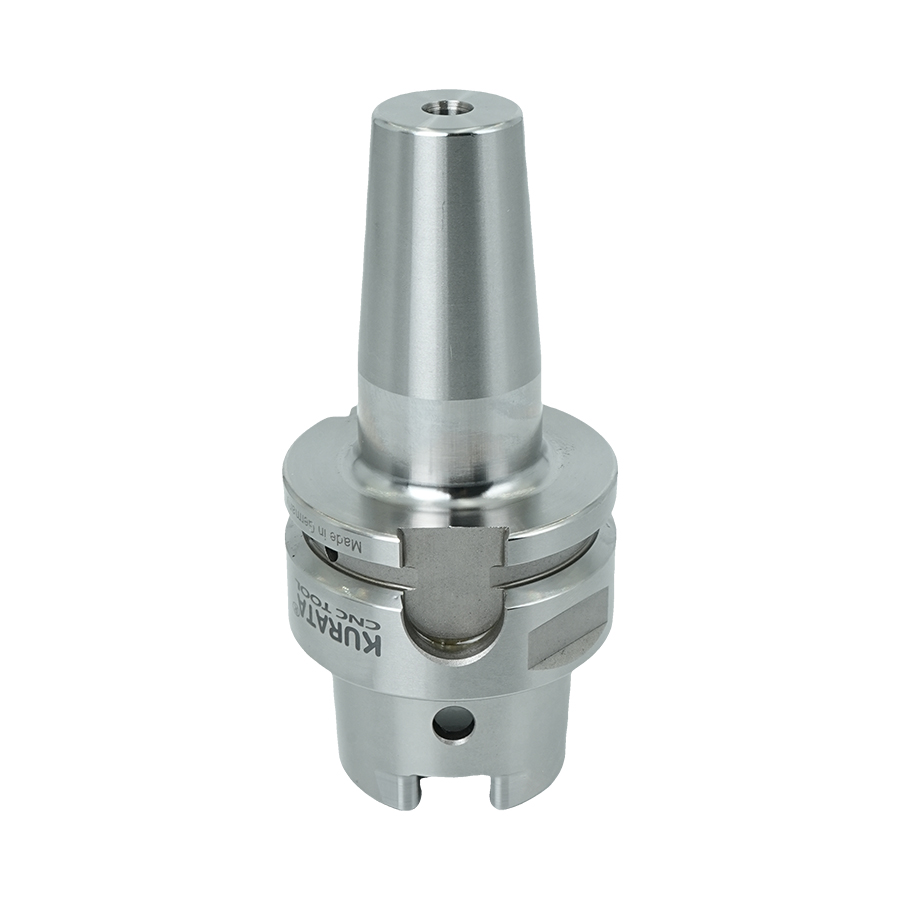
The first specification to confirm is the spindle interface. A tool holder must match the spindle system of the CNC machine to ensure proper positioning, retention, and automatic tool changing.
Common CNC tool holder systems include BT, HSK, BBT, SK, and ISO configurations. KURATA's product range covers multiple spindle standards, including HSK, BT, BBT and ISO tool holders, allowing buyers to select a holder based on their machine configuration.
Before requesting a quotation, check the exact spindle taper and specification of the CNC machine. If you are unsure, provide the machine model or spindle information to the supplier so the correct interface can be confirmed.
Different machining operations place different demands on a CNC tool holder. High-speed finishing, general milling, heavy-duty cutting, drilling, engraving, and grinding should not automatically use the same clamping system.
| Machining Requirement | Potential Tool Holder Type |
|---|---|
| High-speed and high-precision machining | Shrink Fit Tool Holder |
| Flexible tool clamping | ER Collet Holder |
| Precision machining with vibration control | Hydraulic Tool Holder |
| Heavy cutting | Heavy-Duty Tool Holder |
| Face milling | Face Mill Holder |
| Grinding operations | Grinding Wheel Arbor |
The best choice therefore depends on the actual cutting process. If your project involves several operations, it may be more efficient to configure different holder types for different machining stages.
For precision CNC machining, runout is one of the specifications buyers should pay close attention to. Excessive runout can affect tool positioning, cutting consistency, surface finish, and tool life.
The required accuracy depends on the machining application. Mold manufacturing, aerospace components, automotive parts, and high-speed machining may require tighter control than general-purpose machining.
KURATA states that its manufacturing capabilities include high-precision grinding and quality control for tool holders. Buyers should request the actual runout specification for the specific holder model rather than assuming that every CNC tool holder has the same accuracy.
If machining accuracy is critical, provide the supplier with the required runout tolerance, tool diameter, spindle type, and machining speed when requesting a quotation.
The clamping method determines how the cutting tool is secured inside the holder. Different systems provide different combinations of flexibility, rigidity, accuracy, and convenience.
Shrink Fit Tool Holders use thermal expansion and contraction to clamp the cutting tool. They are commonly considered for applications where high concentricity, rigidity, and stable high-speed machining are important.
They can provide a slim tool-holding profile, which may be useful when machining deep cavities or areas where tool access is limited.
Hydraulic Tool Holders use hydraulic pressure to clamp the cutting tool. They are often selected when precision, vibration reduction, and stable tool holding are important considerations.
For precision finishing or applications where vibration can affect the final surface quality, a hydraulic clamping system may be worth evaluating.
ER Collet Holders provide a flexible solution for holding different tool shank sizes through interchangeable collets. This makes them useful for machining operations where tooling flexibility is important.
When selecting an ER system, confirm the holder size, compatible collet range, tool shank diameter, and required accuracy.
Tool rigidity becomes especially important when machining hard materials, deep cavities, or large workpieces. A tool holder that provides stable clamping can help reduce unwanted movement between the spindle, holder, and cutting tool.
Tool projection should also be considered. Excessive tool extension can increase the risk of vibration and deflection. When possible, keep the tool assembly as compact as the machining application allows.
For heavy cutting operations, buyers can evaluate dedicated Heavy-Duty Tool Holders rather than using a general-purpose holder for every machining condition.
The cutting tool shank diameter must match the holder or collet specification. This sounds basic, but it is an important point to confirm before ordering replacement or custom tool holders.
| Information to Confirm | Why It Matters |
|---|---|
| Tool shank diameter | Ensures compatibility between the cutting tool and holder |
| Holder taper | Must match the CNC machine spindle |
| Tool projection | Affects rigidity, vibration, and accessibility |
| Cutting speed | Important for holder balance and high-speed applications |
| Machining operation | Determines the most suitable clamping method |
A precision CNC tool holder becomes particularly important when the machining process requires tight dimensional control, stable cutting, high spindle speeds, or consistent surface quality.
Typical applications include CNC machining centers, aerospace component manufacturing, automotive parts, mold making, and CNC gear grinding. KURATA's application range specifically includes CNC machining centers, aerospace components, automotive parts, and CNC gear grinding.
For these applications, the holder should be evaluated together with the machine spindle, cutting tool, machining parameters, and workpiece material rather than as an isolated component.
When sourcing from a CNC tool holder manufacturer, providing complete technical information makes it easier to select the correct product and obtain an accurate quotation.
CNC machine make and model
Spindle taper and holder standard
Cutting tool type and shank diameter
Required holder type
Machining operation
Spindle speed and cutting conditions
Required runout or precision level
Tool projection and overall dimensions
Required quantity
Special dimensional, balancing, or customization requirements
If you are not sure which holder type is suitable, send the supplier your machine spindle specification, cutting tool information, application, and machining requirements. This is usually more useful than requesting a quotation with only the words “CNC tool holder.”
KURATA Tools specializes in the research and development, production, and sales of high-precision clamping systems for CNC machine tools. Its product range covers Shrink Fit Tool Holders, Hydraulic Tool Holders, ER Collet Holders, SK Collets, Pull-Back Collets, Face Mill Holders, Heavy-Duty Tool Holders, Grinding Wheel Arbors, Probe Holders, and related measuring tools.
This broad product range allows buyers to evaluate different clamping solutions according to spindle standard, machining operation, accuracy requirements, and production conditions instead of being limited to one holder type.
For a CNC tool holder sourcing project, prepare your spindle type, tool dimensions, machining application, required accuracy, and quantity before requesting a quotation. These details help the manufacturer recommend a suitable configuration and reduce the risk of ordering an incompatible holder.
Start by confirming the CNC machine spindle standard, then consider the cutting tool diameter, machining operation, required precision, cutting speed, rigidity, tool projection, and clamping method.
Shrink fit holders use thermal expansion and contraction to clamp the tool, while hydraulic holders use hydraulic pressure. The better choice depends on the required accuracy, vibration control, tooling process, and production conditions.
Provide the machine spindle standard, tool shank diameter, holder type, machining application, required precision, cutting speed, tool projection, quantity, and any special dimensional requirements.
Some general-purpose holders can support multiple operations, but demanding applications may benefit from specialized holders. High-speed machining, heavy cutting, face milling, grinding, and precision finishing can have different tool-holding requirements.
KURATA Tools specializes in the R&D, production, and sales of high-precision clamping systems for CNC machine tools.
E-mail:sales@kuratatools.com