News
As a leading manufacturer of high-precision clamping systems for CNC machine tools in China, we provide product solutions for the CNC machine tool industry.
KURATA TOOLS - Leading Manufacturer of High Precision Clamping Systems. Discover How We Help




As a leading manufacturer of high-precision clamping systems for CNC machine tools in China, we provide product solutions for the CNC machine tool industry.
2026-08-05 15:02:33
A grinding wheel that chatters, wobbles, or wears unevenly usually isn't a wheel problem — it's an arbor problem. The arbor is what holds the wheel true to the spindle, and if the diameter, balance grade, or material doesn't match your machine and application, no amount of wheel dressing will fix the vibration. Here's how to actually pick the right Grinder Arbor instead of guessing.
As a manufacturer supplying grinding arbors for CNC and manual machines, we walk through the same five checks with nearly every customer before recommending a spec. This guide covers those checks so you can source with confidence.
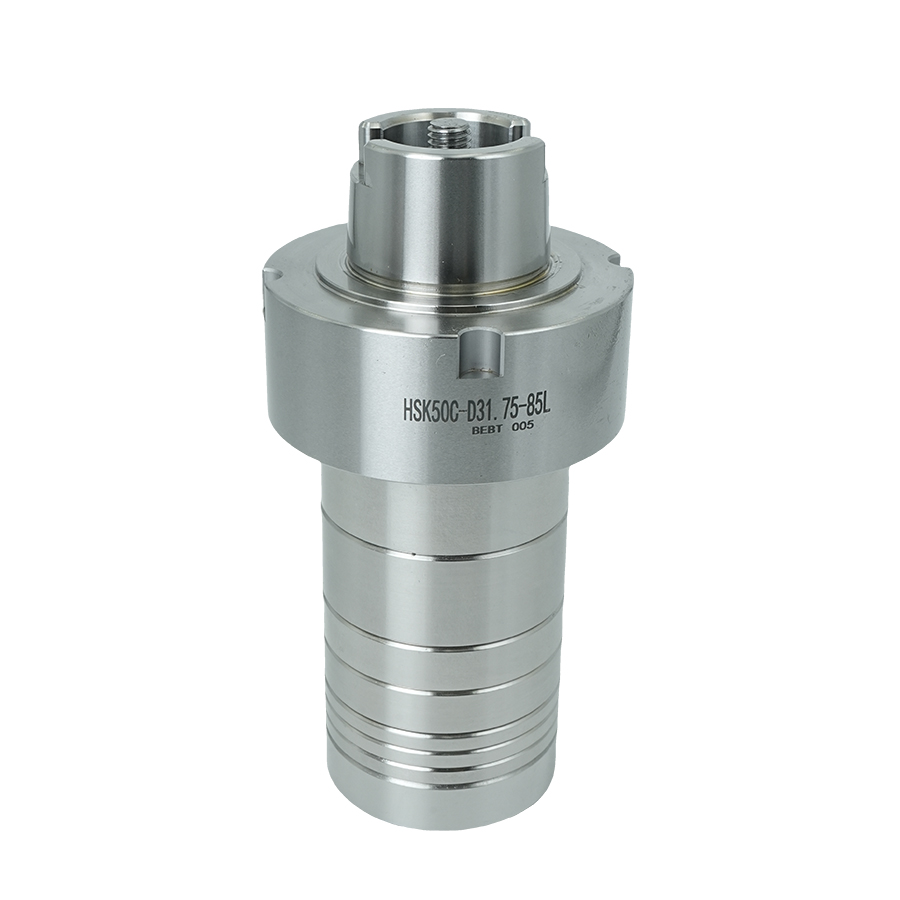
Before comparing suppliers or pricing, narrow your decision down to five factors: machine type, bore/shaft diameter, mounting style, balance grade, and material. Getting any one of these wrong usually shows up as vibration, poor wheel life, or a part that simply won't mount.
Not every arbor works on every machine. Confirm which category fits your setup:
Surface grinding machines — for flat surfaces, precision plates, and dies
Cylindrical grinding machines — for shafts, pins, and cylindrical components
Tool and cutter grinders — for sharpening and finishing cutting tools
Bench grinders — general-purpose grinding and shaping
Trying to fit a bench-grinder-style arbor onto a CNC cylindrical grinder (or the reverse) is one of the most common sourcing mistakes — always confirm machine compatibility before diameter or balance grade.
Standard Grinder Arbors typically cover a diameter range of roughly Ø8–Ø50mm with lengths from 100–500mm, while CNC-specific arbors run around Ø12–Ø50mm. If your application falls outside these standard ranges — larger wheel bores, longer reach into a fixture, or a non-standard shaft — custom diameters and lengths are usually available, but you need to specify this upfront rather than forcing a standard size to fit.
Arbors typically come in two mounting styles:
Standard arbors — fixed diameter fit, straightforward mounting for common wheel sizes
Threaded arbors — adjustable mounting, useful when you need to swap between wheel sizes or thicknesses more frequently
If your shop runs multiple wheel sizes on the same machine, a threaded arbor usually saves more changeover time than it costs upfront.
This is the spec that determines whether your setup runs smooth or chatters at speed. Most precision Grinder Arbors are dynamically balanced to G2.5, which supports spindle speeds in the 5,000–8,000 RPM range depending on diameter and construction. If your grinding operation runs at the higher end of that range — CNC tool and cutter grinding, for example — confirm the specific max RPM rating for the exact arbor model rather than assuming all G2.5 arbors perform identically at every diameter.
Not sure which balance grade or RPM rating fits your spindle? Send us your machine model and target speed, and we'll confirm the right spec within 24 hours.
Look for hardened or heat-treated steel construction rather than untreated mild steel. Heat-treated arbors resist wear and deformation far longer under repeated mounting and unmounting, which matters most in shops running high wheel-change frequency or heavier industrial duty cycles.
Metalworking — grinding shafts, dies, and precision components
Aerospace — high-precision parts requiring smooth surface finish
Automotive — engine components, transmission shafts, tool sharpening
General industrial maintenance — repair operations needing reliable, off-the-shelf compatibility
Assuming any arbor with the right bore diameter will work — machine type and mounting style matter just as much
Skipping the balance grade check on higher-speed applications, then troubleshooting vibration later
Choosing untreated steel to save cost on high-duty-cycle operations, then replacing arbors more frequently than the savings justify
Not specifying custom length upfront when your fixture or reach requirement falls outside standard ranges
1. What diameter Grinder Arbor do I need?
It depends on your wheel's bore size and your machine's shaft. Standard arbors cover Ø8–Ø60mm; if your application falls outside this, custom diameters are available on request.
2. Can I use the same arbor on a CNC grinder and a bench grinder?
Generally no — CNC grinder arbors and general-purpose bench grinder arbors are built to different tolerance and mounting standards. Confirm machine compatibility before ordering.
3. Does balance grade actually matter for lower-speed grinding?
It matters less at low RPM, but any application running a few thousand RPM or higher benefits from G2.5 balancing to avoid vibration and uneven wheel wear.
4. Can I get a custom arbor length or thread spec?
Yes — send us your machine model and dimensions and we'll confirm custom diameter, length, and thread options along with a quote.
Choosing the right Grinder Arbor comes down to matching machine type, diameter, mounting style, and balance grade to your actual operation — not just grabbing whatever fits the bore. If you're not sure which spec is right for your setup, send us your details and we'll recommend the correct configuration.
KURATA Tools specializes in the R&D, production, and sales of high-precision clamping systems for CNC machine tools.
E-mail:sales@kuratatools.com