News
As a leading manufacturer of high-precision clamping systems for CNC machine tools in China, we provide product solutions for the CNC machine tool industry.
KURATA TOOLS - Leading Manufacturer of High Precision Clamping Systems. Discover How We Help




As a leading manufacturer of high-precision clamping systems for CNC machine tools in China, we provide product solutions for the CNC machine tool industry.
2026-08-05 14:43:44
A tool holder that ran perfectly six months ago can quietly drift out of tolerance — and by the time it shows up as chatter marks, inconsistent hole diameters, or a scrapped part, you've already lost time and material. Runout doesn't usually fail all at once; it creeps up. Knowing what causes it, how to check for it, and when to fix versus replace is what keeps a CNC shop out of that situation.
As a manufacturer of precision clamping systems, we get runout questions from machinists more than almost any other topic. This guide covers the real causes, how to measure runout correctly, and what actually fixes it.
Runout is the amount a cutting tool deviates from a true, centered rotation as the spindle turns. Even a small deviation — a few microns — gets multiplied at the cutting edge, showing up as poor surface finish, uneven wear on multi-flute tools, reduced dimensional accuracy, and shorter tool life. In high-speed or finishing operations, excessive runout is often the hidden reason a program that "should" work keeps producing marginal parts.
Chips, coolant residue, or old grease trapped between the tool holder taper and the spindle bore prevent full, even contact. Even a thin film of debris can throw off concentricity.
Collets lose their grip consistency over time, especially with repeated overtightening or use past their rated clamping cycles. A worn collet can no longer distribute force evenly around the tool shank.
Dropped holders, taper dings, or corrosion on the mating surfaces all compromise the precision fit the system depends on. Damage that isn't visible to the eye can still be enough to push runout out of tolerance.
Undertightening leaves the tool free to shift under cutting load; overtightening can deform collets or seals. Both push runout in the wrong direction.
Standard collet-based clamping relies on mechanical parts making contact at discrete points rather than a continuous, uniform grip. Over time and with repeated tool changes, this point-contact design is inherently more prone to runout drift than systems that clamp with even pressure around the entire shank.
Before replacing anything, confirm what you're actually dealing with:
Clean the taper, bore, and collet thoroughly and re-check before assuming a part is worn
Mount a dial indicator or use a runout gauge against the tool shank, close to the holder face
Rotate the spindle slowly by hand (or at very low RPM) and read the total indicated runout
Check at two points along the tool length — near the holder and near the tool tip — to separate holder runout from tool deflection
Compare the reading against the rated tolerance for your holder type; most precision holders are rated for ≤0.003mm to ≤0.005mm
If runout is within spec at the holder face but grows significantly toward the tool tip, the issue is more likely tool deflection or an overly long stick-out, not the holder itself.
Clean before every tool change — a quick wipe of the taper and bore prevents most contamination-related runout
Use a torque wrench for collet nuts instead of tightening by feel, and follow the manufacturer's spec
Inspect collets regularly and replace them on a set cycle rather than waiting for visible failure
Store holders properly — in a rack or case, not loose in a drawer where tapers can get dinged
Track runout over time for critical holders so drift gets caught before it affects parts, not after
If you're seeing runout complaints on a specific machine or job, send us the spindle interface and application details — we can tell you within 24 hours whether a maintenance fix or a different clamping system is the better move.
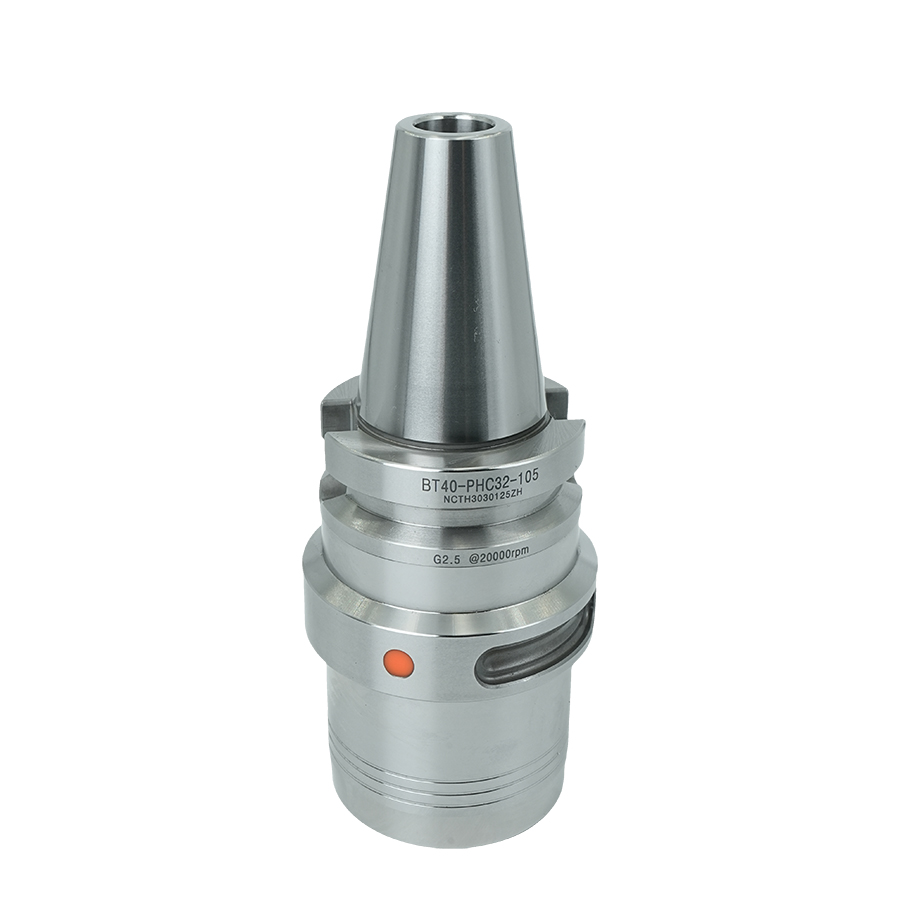
Good maintenance habits reduce runout problems, but the clamping method itself sets the ceiling on how low runout can go. Mechanical collet systems clamp at discrete contact points, which is why even well-maintained collet holders tend to plateau around 5–10 microns of runout. A BT40 Hydraulic Chuck uses a hydraulic chamber instead of mechanical clamping — it distributes pressure evenly around the entire tool shank rather than at a few points, which is why Hydraulic Tool Holders typically hold runout to around 3 microns and keep it there more consistently over repeated tool changes.
If your shop is chasing tighter tolerances on finishing operations and keeps running into runout drift no matter how well the collets are maintained, switching the clamping method — not just the maintenance routine — is usually what actually solves it.
Clean taper and bore surfaces at every tool change, not just during scheduled maintenance
Apply light anti-rust oil before long-term storage to prevent corrosion on mating surfaces
Avoid dropping or stacking holders directly on top of each other
Re-check runout after any collision, crash, or dropped tool event, even if no damage is visible
Keep a simple log of runout readings for critical holders to catch gradual drift early
KURATA Tools specializes in the R&D, production, and sales of high-precision clamping systems for CNC machine tools.
E-mail:sales@kuratatools.com