News
As a leading manufacturer of high-precision clamping systems for CNC machine tools in China, we provide product solutions for the CNC machine tool industry.
KURATA TOOLS - Leading Manufacturer of High Precision Clamping Systems. Discover How We Help




As a leading manufacturer of high-precision clamping systems for CNC machine tools in China, we provide product solutions for the CNC machine tool industry.
2026-09-09 17:23:38
HSK A and HSK T tools are two types of HSK Tool Holders used in CNC machining. Both use the HSK hollow shank taper interface to connect cutting tools with a machine spindle, but they are designed for different machining requirements.
The main difference between HSK A and HSK T is their intended application and angular positioning. HSK-A tool holders are widely used for milling, drilling, and general machining center applications, while HSK-T tool holders are designed mainly for turn-mill machines and applications where precise angular tool positioning is important.
Understanding the difference between these HSK Tool Holder types can help manufacturers select the right tooling solution for their CNC equipment.
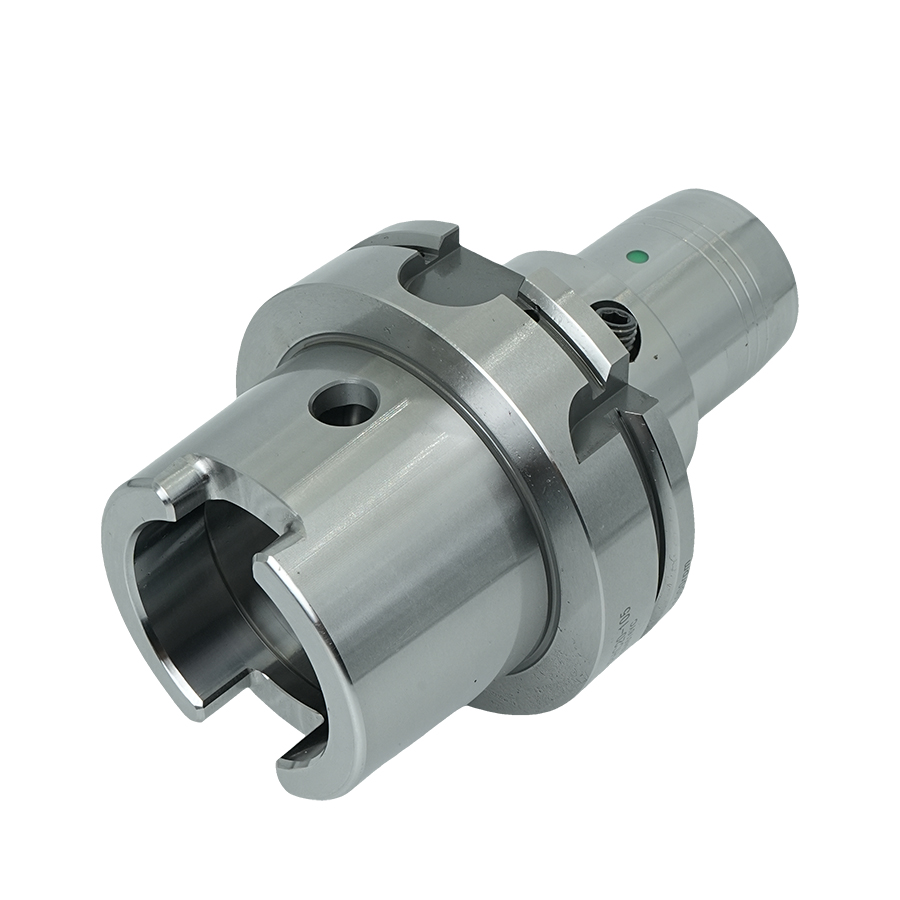
An HSK tool holder is a precision tool interface used to connect a cutting tool to a CNC machine spindle. HSK stands for Hollow Shank Taper, and its hollow design provides a rigid and accurate connection between the tool holder and spindle.
HSK Tool Holders are widely used in high-speed and precision CNC machining because they can provide good repeatability, rigidity, and positioning accuracy.
Common HSK types include:
HSK-A
HSK-B
HSK-C
HSK-D
HSK-E
HSK-F
HSK-T
Different HSK types are designed for different machine configurations and machining applications.
An HSK-A tool holder is one of the commonly used HSK interfaces for CNC machining centers. It is suitable for general-purpose machining operations such as milling, drilling, and other cutting processes.
HSK-A tool holders are commonly used for:
CNC milling
Drilling
Machining centers
High-speed machining
General precision machining
Automatic tool changing
They can be combined with different cutting tool holding systems, such as ER collet chucks, end mill holders, and other tool holder configurations.
An HSK-A tool holder can provide:
Good radial and axial positioning
High rigidity
Good repeatability
Reliable automatic tool changing
Suitability for high-speed machining
Compatibility with various cutting tools
For general CNC machining centers, HSK-A is often a practical and versatile tool holder interface.
An HSK-T tool holder is designed specifically for applications such as turn-mill machining, where the angular orientation of the cutting tool is important.
Unlike standard milling applications, turn-mill machines may require the cutting tool to maintain a precise angular position during machining. HSK-T tool holders are designed with this requirement in mind.
HSK-T tool holders are commonly associated with:
Turn-mill centers
CNC turning and milling
Mill-turn machining
Multi-task machining
Angular-positioning applications
Precision machining
HSK-T can be used when the machining process requires more controlled angular positioning of the tool.
The key difference between HSK-A and HSK-T is their design focus.
HSK-A is commonly used for CNC machining centers and general milling applications.
HSK-T is primarily intended for turn-mill and related applications where angular tool positioning is important.
Angular positioning is one of the most important considerations when comparing HSK-A vs HSK-T.
HSK-T is designed to provide controlled angular positioning for applications that require the tool to maintain a defined orientation. This is particularly useful on turn-mill machines.
HSK-A is more commonly used for conventional milling and machining center applications where this specific angular positioning requirement is less critical.
HSK-A is frequently found on CNC machining centers, while HSK-T is associated more closely with CNC turn-mill centers and multi-task machines.
The correct HSK interface must always match the machine spindle and tooling system specified by the machine manufacturer.
| Feature | HSK-A | HSK-T |
|---|---|---|
| Main application | CNC machining centers | Turn-mill centers |
| Typical machining | Milling and drilling | Turning and milling |
| Angular positioning | General | Important feature |
| High-speed machining | Suitable | Suitable depending on system |
| Automatic tool changing | Supported | Supported |
| Typical use | General CNC machining | Multi-task and turn-mill machining |
Although both are HSK tool holder interfaces, they should not be treated as interchangeable simply because they have a similar basic taper design.
Choosing between an HSK-A tool holder and an HSK-T tool holder depends mainly on the CNC machine and machining process.
The first step is to confirm the spindle interface specified by the CNC machine manufacturer. The tool holder must match the machine spindle.
For conventional CNC milling and machining center operations, HSK-A may be suitable.
For turn-mill applications where precise tool orientation is required, HSK-T may be more appropriate.
If the tool needs to maintain a specific angular position during machining, the angular positioning characteristics of the HSK-T system should be considered.
Cutting speed, cutting forces, tool length, workpiece material, and machining strategy can also influence the choice of CNC tool holder.
HSK tool holders are widely used in precision CNC machining because their hollow-shank design can provide a stable connection between the spindle and tool holder.
A properly matched HSK interface can provide stable tool support during machining.
HSK systems are designed for accurate tool positioning and repeatable tool changes.
Many HSK systems are used in high-speed machining applications, although actual performance depends on the specific holder, machine spindle, balancing, and operating conditions.
HSK tool holders can be integrated into CNC automatic tool-changing systems, improving machining efficiency.
The primary difference is their intended application and angular positioning characteristics. HSK-A is commonly used for CNC machining centers, while HSK-T is designed for turn-mill applications where controlled angular positioning is important.
Yes. HSK-A tool holders are widely used for CNC milling, drilling, and other machining center operations.
HSK-T tool holders are mainly used for turn-mill and multi-task machining applications where precise angular tool positioning is required.
They should not be assumed to be interchangeable. The correct tool holder must match the machine spindle, tooling system, and manufacturer's specifications.
Yes, suitable HSK tool holders are commonly used in high-speed machining. However, high-speed performance also depends on holder balance, spindle speed, tool geometry, machine configuration, and cutting conditions.
Neither is universally better. HSK-A is generally suited to conventional machining center applications, while HSK-T is better suited to turn-mill applications requiring controlled angular positioning.
Understanding the difference between HSK A and HSK T tools is important when selecting a CNC tool holder for precision machining. Both belong to the HSK family, but they are designed around different machining requirements.
HSK-A tool holders are widely used for CNC milling, drilling, and general machining centers. HSK-T tool holders are designed for turn-mill and multi-task machining applications where accurate angular tool positioning is particularly important.
Before selecting an HSK tool holder, always verify the machine spindle interface, machining operation, tool orientation, cutting conditions, and tooling specifications. Choosing the appropriate HSK system can help improve machining stability, positioning accuracy, and overall production efficiency.
KURATA Tools specializes in the R&D, production, and sales of high-precision clamping systems for CNC machine tools.
E-mail:sales@kuratatools.com